
Type 2: Lumpy and Sausage-Shaped
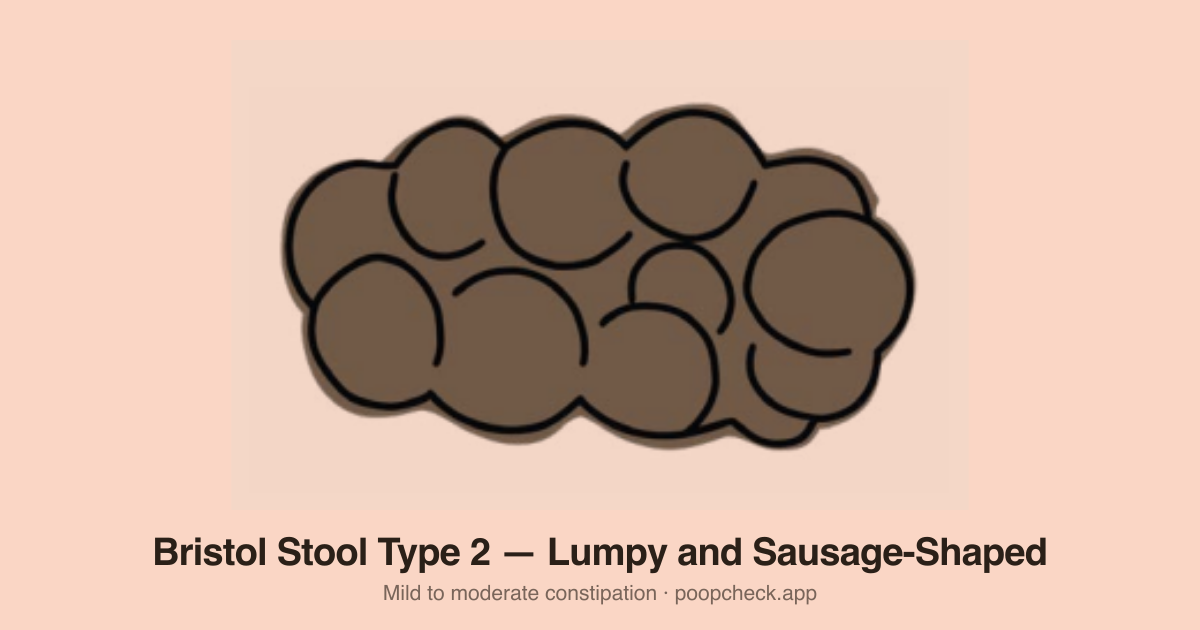
Sausage-shaped but lumpy on the surface — like several Type 1 lumps pressed together.
What Type 2: Lumpy and Sausage-Shaped means
Type 2 still indicates constipation — less severe than Type 1 but still slow transit. The stool has formed a single mass but individual hard lumps are visible on the surface, suggesting the colon compressed already-dry material.
- Transit time is slower than healthy, though not as extreme as Type 1.
- Passing Type 2 can still require straining.
- Frequently Type 2 output is a sign that diet and hydration need adjustment — often fixable without medical intervention.
Common causes
- Marginal fiber intake
- Insufficient hydration
- Sedentary days in a row
- Travel, new environment, or schedule disruption
When to see a doctor
- Sustained Type 2 for 3+ weeks without dietary change explanation.
- Accompanied by blood, unexplained weight loss, new abdominal pain.
- Sudden shift from Type 3/4 to Type 2 in adults over 45 without cause.
PoopCheck is a tracker and classifier, not a replacement for medical care. If you see any red flags above, see a qualified clinician.
How to shift toward the healthy range (Type 3–4)
- Add one extra serving of whole plant food per meal.
- Aim for 2–3 L of water daily, more if active.
- Walk 20–30 minutes after meals — activates the gastrocolic reflex.
- Try a tablespoon of ground flaxseed or chia seeds daily — both soluble and insoluble fiber.
Foods commonly associated with Lumpy sausage stool
- Low-vegetable diets.
- Heavy cheese/dairy consumption.
- High white-bread / low-whole-grain patterns.
Neighbors on the Bristol scale
- Type 1: Separate Hard Lumps — more severe constipation.
- Type 3: Sausage-Shaped with Cracks — on the healthy side.
Related guides
- fiber and stool consistency — Soluble fiber softens this type of stool.
- how to improve gut health — Dietary strategies for regularity.
FAQ
Is Type 2 (Lumpy and Sausage-Shaped normal?
Type 2: Lumpy and Sausage-Shaped falls outside the ideal range (Types 3–4). Occasional episodes are common, but consistent Type 2: Lumpy and Sausage-Shaped for more than a few weeks — or combined with other symptoms — deserves attention.
What causes Lumpy sausage stool?
Marginal fiber intake; Insufficient hydration; Sedentary days in a row. See the full list above with citations.
When should I see a doctor about Lumpy sausage stool?
Sustained Type 2 for 3+ weeks without dietary change explanation. Also: Accompanied by blood, unexplained weight loss, new abdominal pain. See a healthcare provider for any of these.
How can I shift toward Type 3 or 4?
Add one extra serving of whole plant food per meal.; Aim for 2–3 L of water daily, more if active.; Walk 20–30 minutes after meals — activates the gastrocolic reflex.. These are starting points — persistent issues deserve a clinician evaluation.
Sources
- Stool Form Scale as a Useful Guide to Intestinal Transit Time — Lewis SJ, Heaton KW (1997)
- Bristol Stool Chart: Types & What They Mean — Cleveland Clinic
- Constipation — NHS
Track your Bristol type automatically
PoopCheck classifies your stool by Bristol type, color, and consistency from a single photo — and shows the pattern over time.
Download Free