
Poop Pictures: What Healthy and Unhealthy Stool Looks Like
Most people have no reference point for what is normal. Below are labelled pictures of all seven stool consistencies and all eight stool colors, so you can compare what you actually saw against something concrete.
Pictures of all 7 stool types
The Bristol Stool Chart is the clinical standard for classifying stool consistency. Types 3 and 4 are the healthy range — everything above is too slow, everything below is too fast.
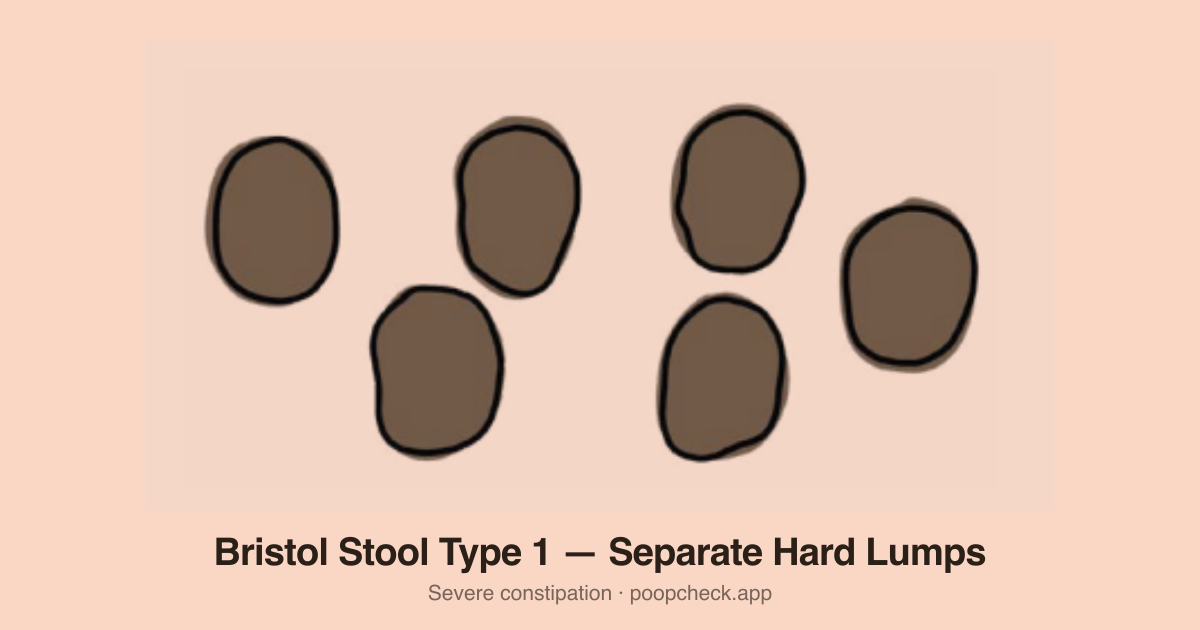
Type 1: Separate Hard Lumps
Small, hard, separate lumps that look like nuts or rabbit droppings.
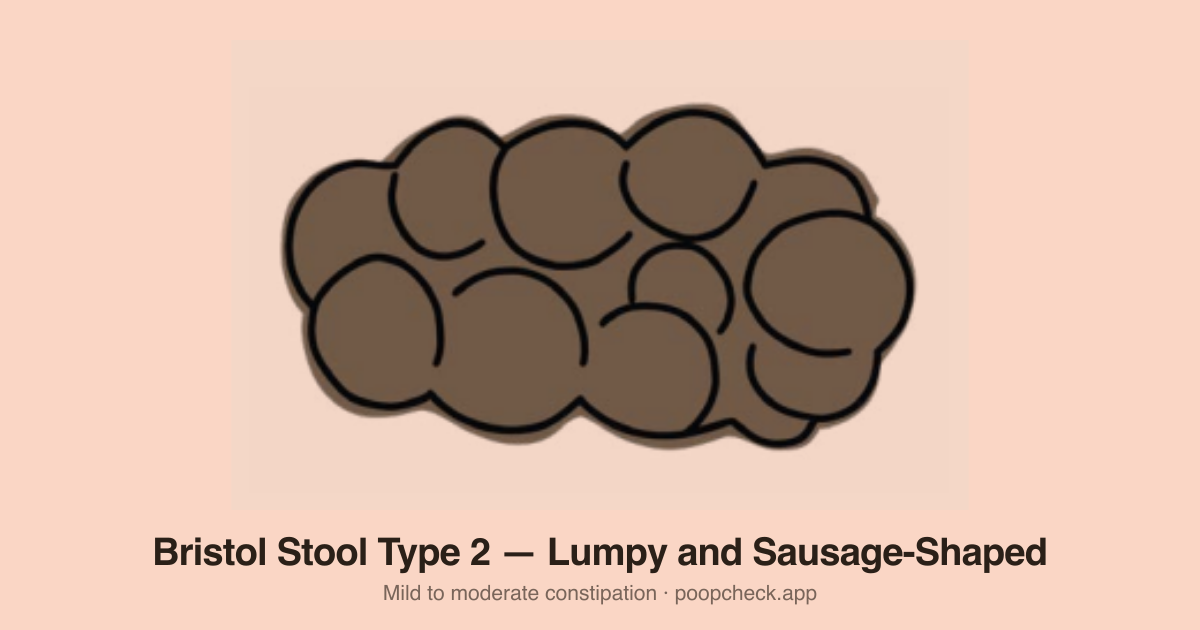
Type 2: Lumpy and Sausage-Shaped
Sausage-shaped but lumpy on the surface — like several Type 1 lumps pressed together.
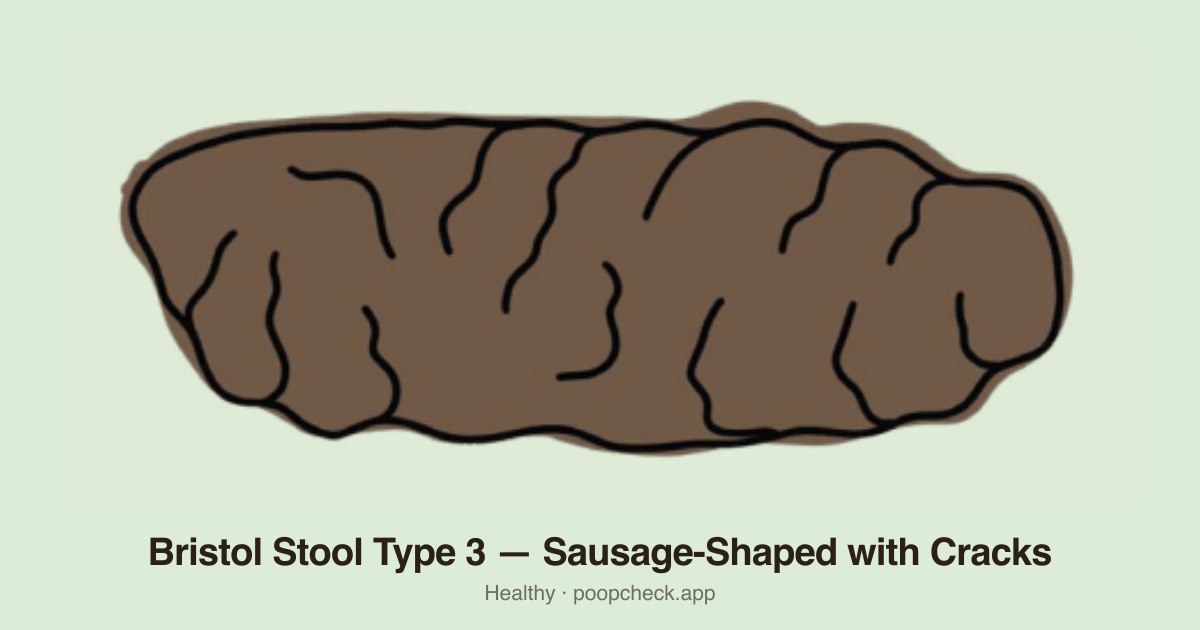
Type 3: Sausage-Shaped with Cracks
Like a sausage but with cracks on the surface. Holds together, passes smoothly.
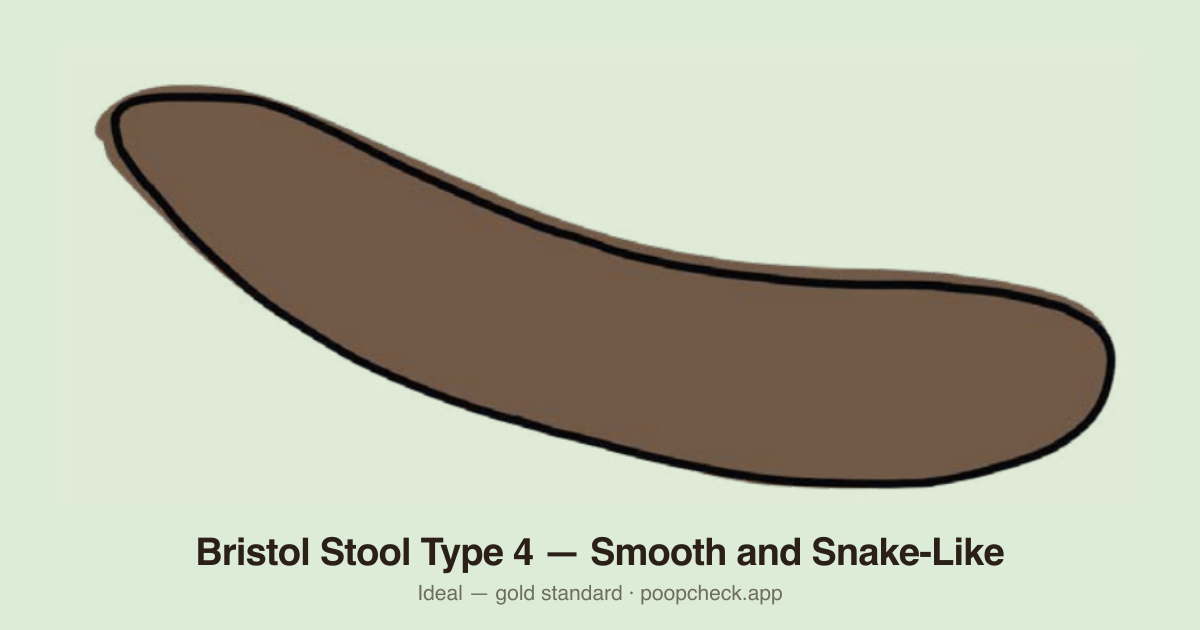
Type 4: Smooth and Snake-Like
Smooth, soft, and snake-like or sausage-shaped. Typically a single piece.
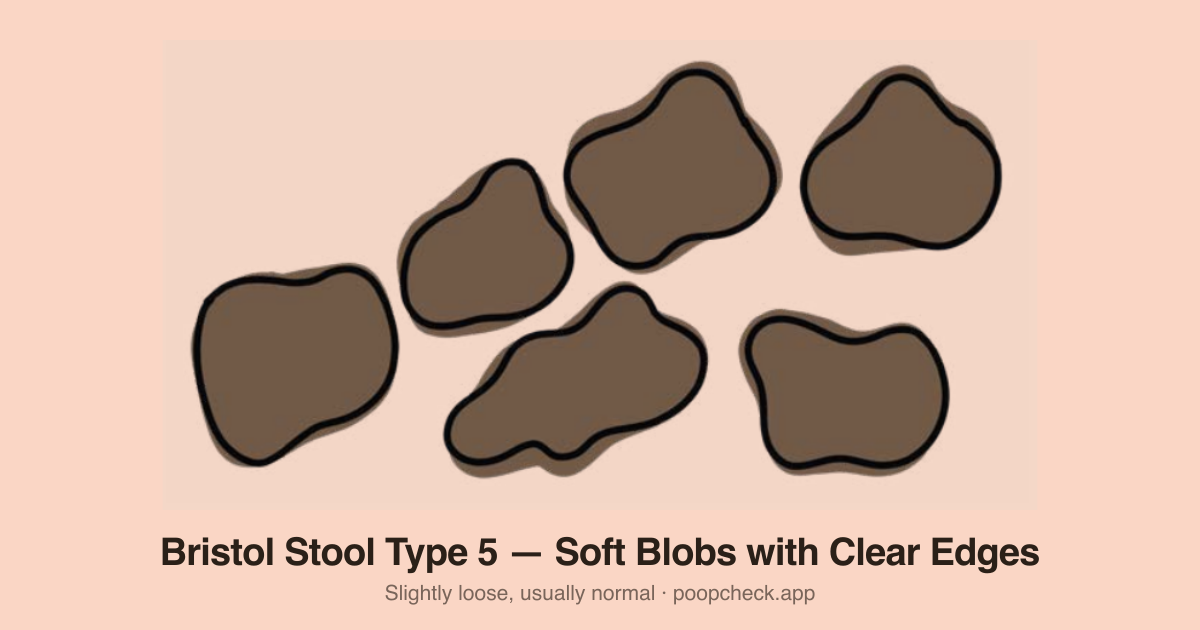
Type 5: Soft Blobs with Clear Edges
Soft blobs with clear-cut edges that pass easily. Multiple separate pieces.
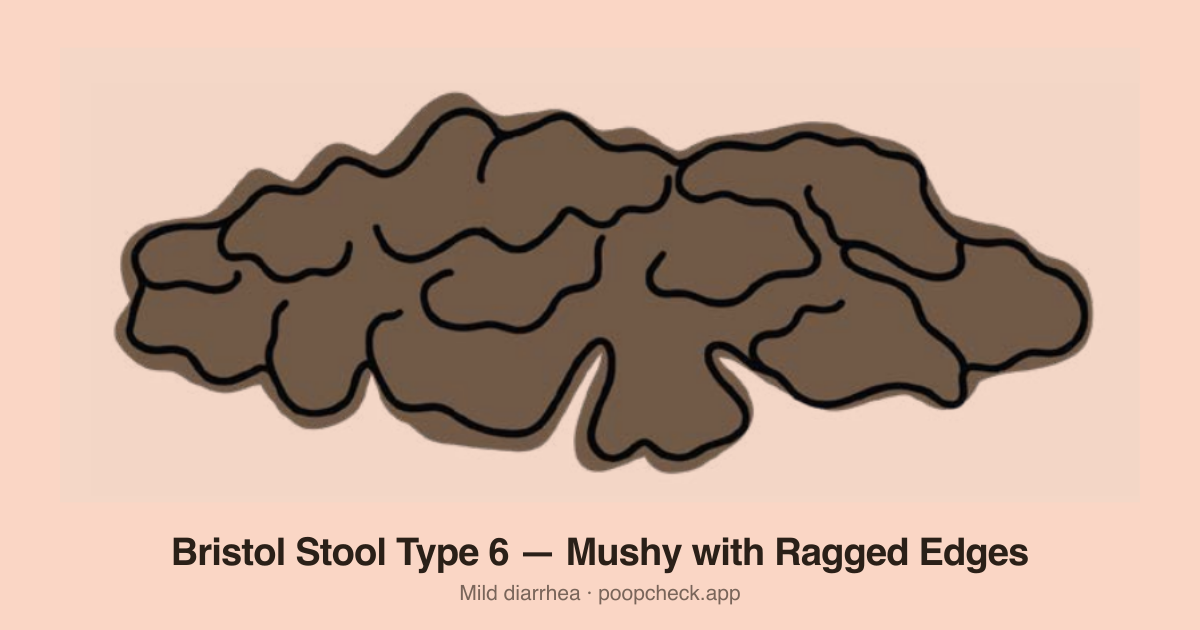
Type 6: Mushy with Ragged Edges
Fluffy pieces with ragged edges, a mushy stool. No definite shape.
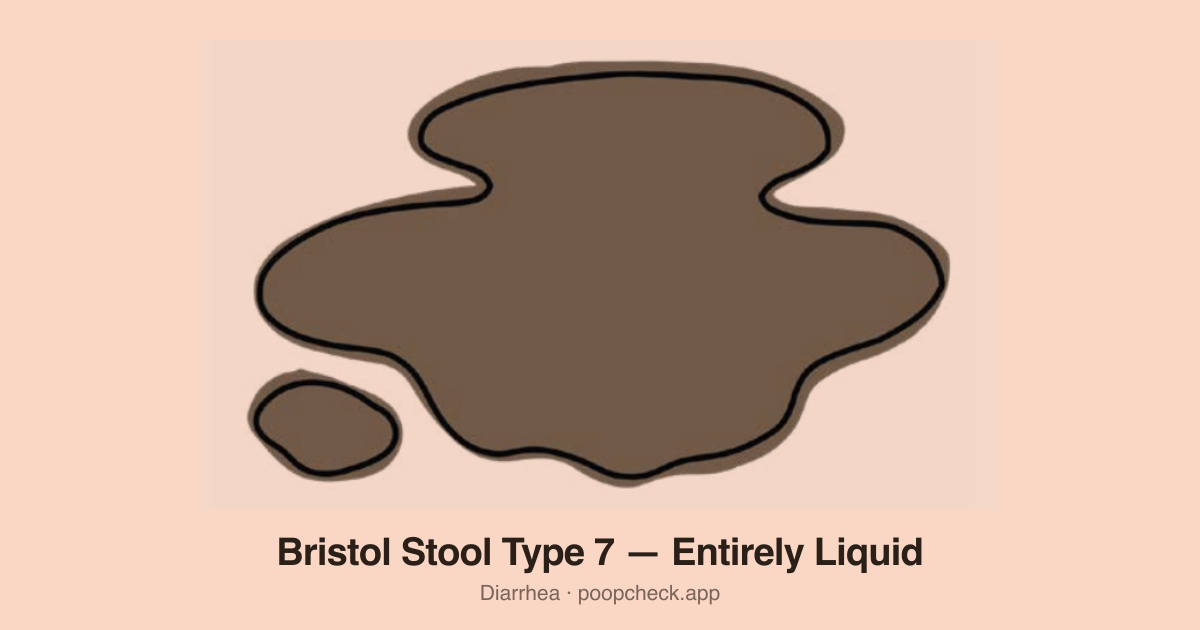
Type 7: Entirely Liquid
Completely liquid with no solid pieces. Watery.
The full Bristol chart
All seven types in one image, free to save or republish with credit.
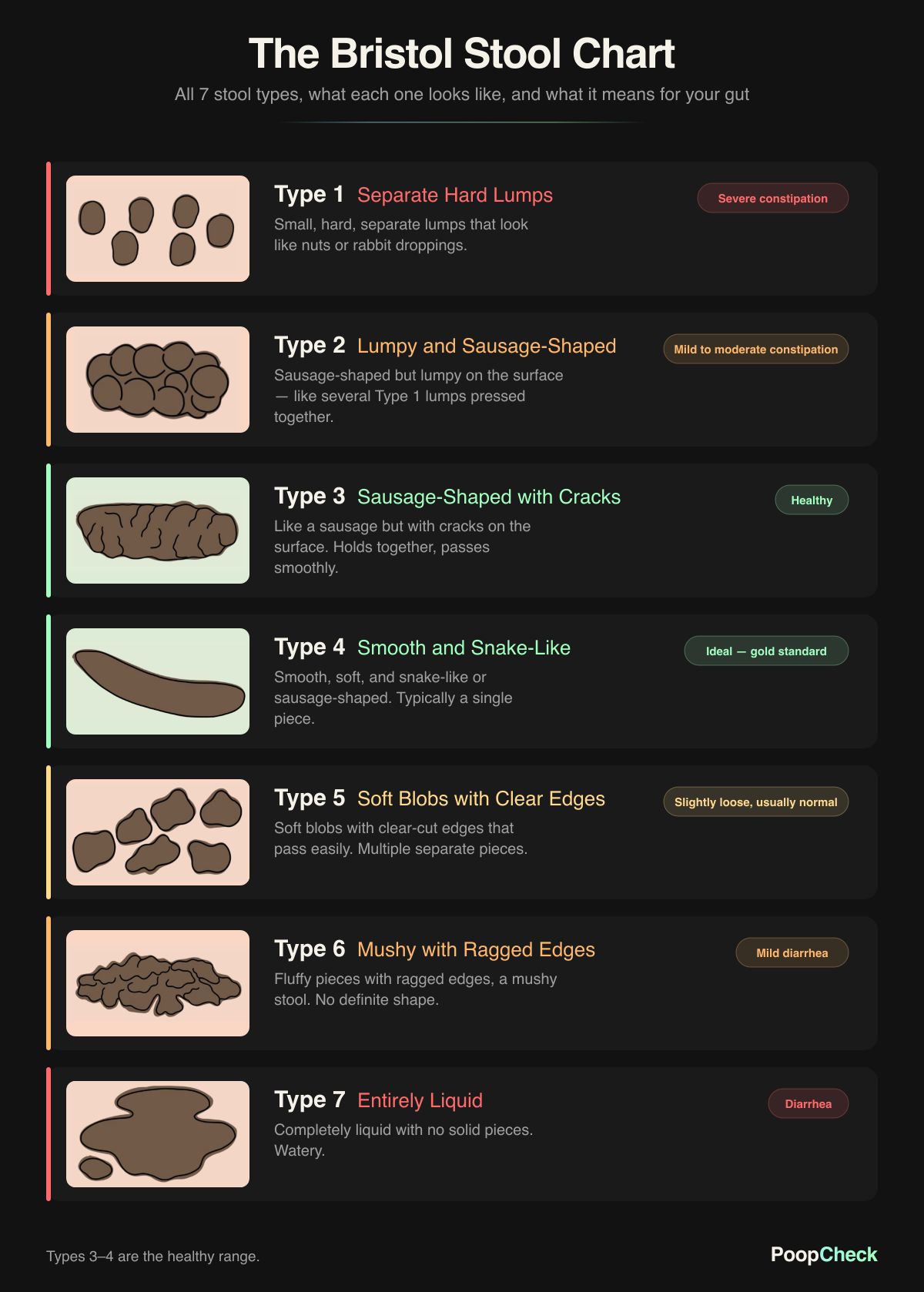
See the full Bristol Stool Chart guide, with causes and fixes for each type →
Pictures of all 8 stool colors
Stool is brown because of bile. A shift in color usually reflects diet, transit speed, or bile flow — three of these eight are worth a doctor's visit.
Medium Brown
Typically normalLight Brown / Tan
Typically normalDark Brown
Typically normalGreen
Worth watchingYellow / Greasy
Worth watchingPale / Clay
See a doctorRed
See a doctorBlack / Tarry
See a doctor
See the full poop color chart, with causes for every color →
How to use these pictures
Match on two axes, not one. Find the consistency that looks closest on the Bristol chart, then find the closest color. "Type 6 and yellow" is a far more useful description than "it looked wrong", both for your own tracking and for a conversation with a doctor.
Then watch the pattern rather than the instance. One unusual bowel movement after a heavy meal or a stressful day means very little. The same type or color recurring across a week or two is the signal worth acting on.
When pictures are not enough
- Blood in or on the stool, or black tarry stool, with no dietary explanation.
- Pale or clay-colored stool, particularly with dark urine or yellowing skin.
- Persistent Type 1–2 or Type 6–7 lasting more than two weeks.
- Any change alongside unexplained weight loss, fever, or severe pain.
- Pencil-thin stools that persist.
These are medical illustrations, not photographs, and this page is not medical advice or a diagnosis. PoopCheck is a tracker and classifier, not a substitute for medical care. See a qualified clinician about any concerning symptom.
FAQ
What does healthy poop look like?
Healthy stool looks like a smooth, soft, sausage- or snake-shaped single piece — Type 4 on the Bristol Stool Chart — in some shade of brown. It should pass easily without straining and hold together rather than breaking apart or smearing. Type 3, a sausage with surface cracks, is equally healthy.
What does unhealthy poop look like?
On the constipated end, small separate hard lumps like nuts (Type 1) or a lumpy sausage (Type 2) mean stool spent too long in the colon. On the loose end, mushy pieces with ragged edges (Type 6) or entirely liquid stool (Type 7) mean it moved through too fast. On color, pale clay, red without a dietary cause, or black and tarry are the three that need medical attention.
How can I compare my stool to these pictures?
Match on two axes rather than one. First find the consistency that looks closest on the Bristol chart, then find the closest color on the color chart. A single unusual result is rarely meaningful — what matters is whether the same type or color keeps recurring over a week or more.
Are these real photos of poop?
No. These are medical illustrations drawn to depict each Bristol type and stool color accurately. Illustrations are the standard used in clinical settings because they show the defining features of each type more clearly and consistently than photographs.
Skip the comparing
PoopCheck classifies Bristol type, color and consistency from a photo in seconds — and remembers the pattern so you don't have to.
Download Free