
The Bristol Stool Chart
Developed in 1997 at the Bristol Royal Infirmary, the Bristol Stool Scale is the most widely used clinical tool for classifying stool consistency. It maps stool into 7 types, from hard pellets (constipation) to fully liquid (diarrhea). Types 3 and 4 are the healthy range.
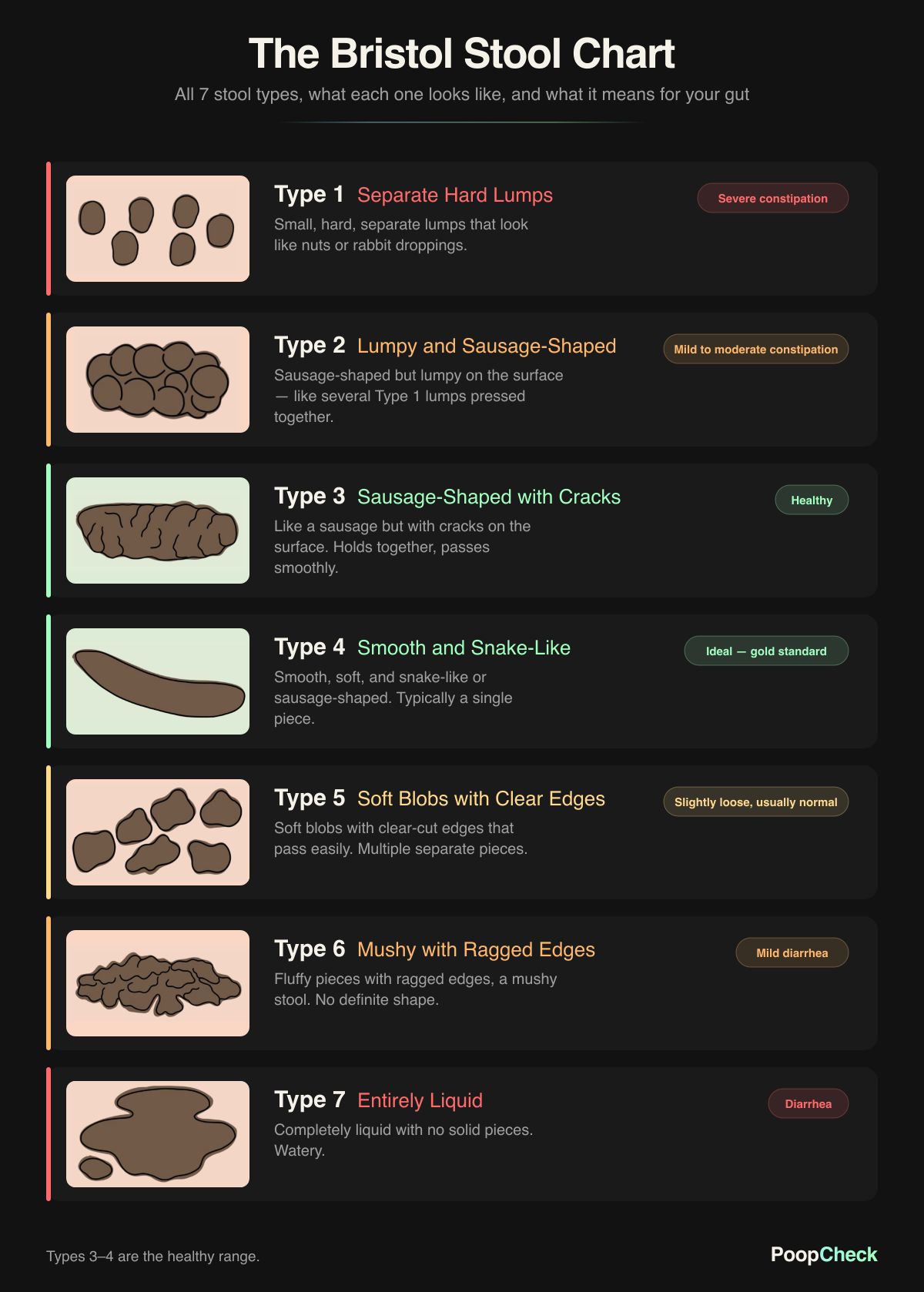
Use this chart on your site — free, just credit us
Copy the snippet below. You're welcome to republish this chart anywhere as long as the attribution link stays intact.
Download PNGAll 7 Bristol stool types, with pictures
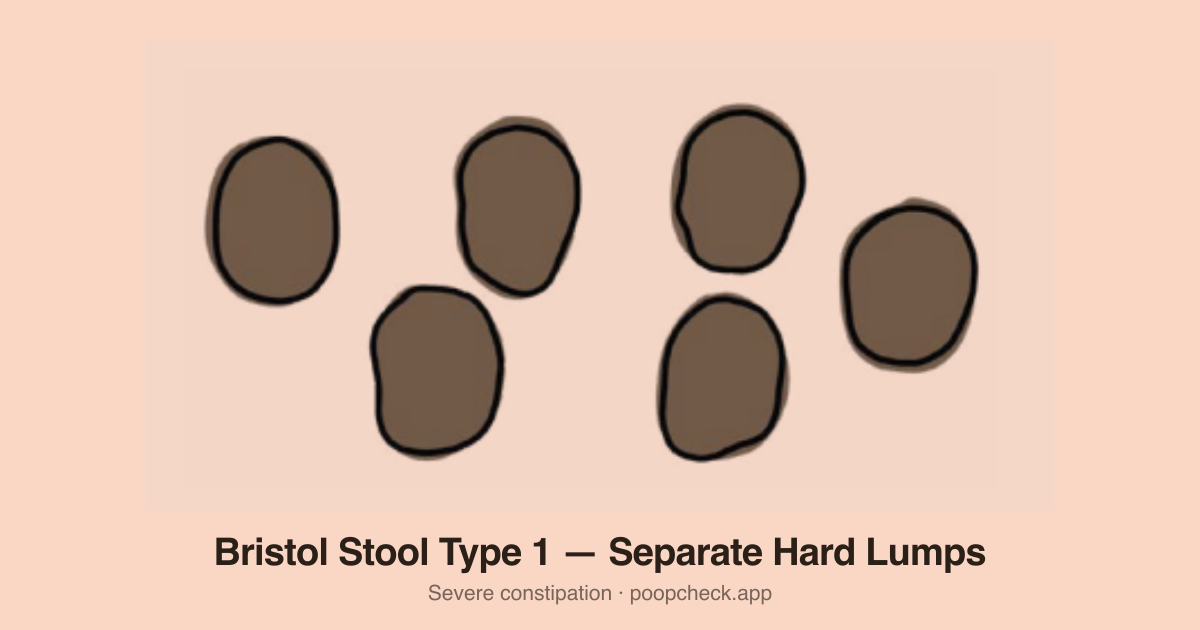
Type 1: Separate Hard Lumps
Small, hard, separate lumps that look like nuts or rabbit droppings.
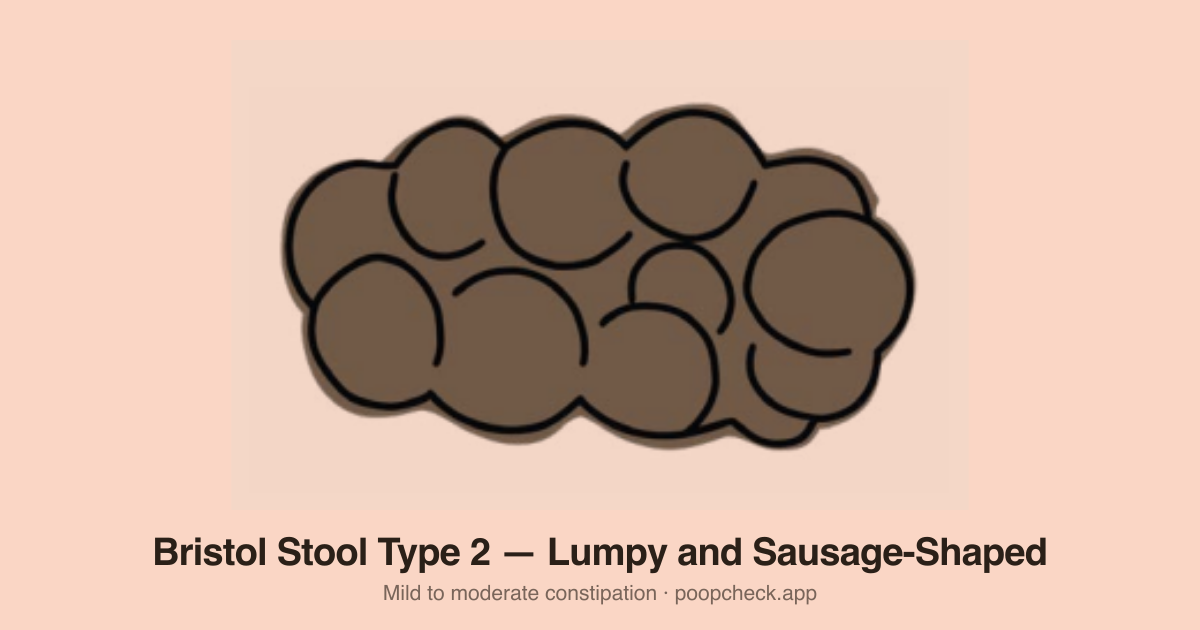
Type 2: Lumpy and Sausage-Shaped
Sausage-shaped but lumpy on the surface — like several Type 1 lumps pressed together.
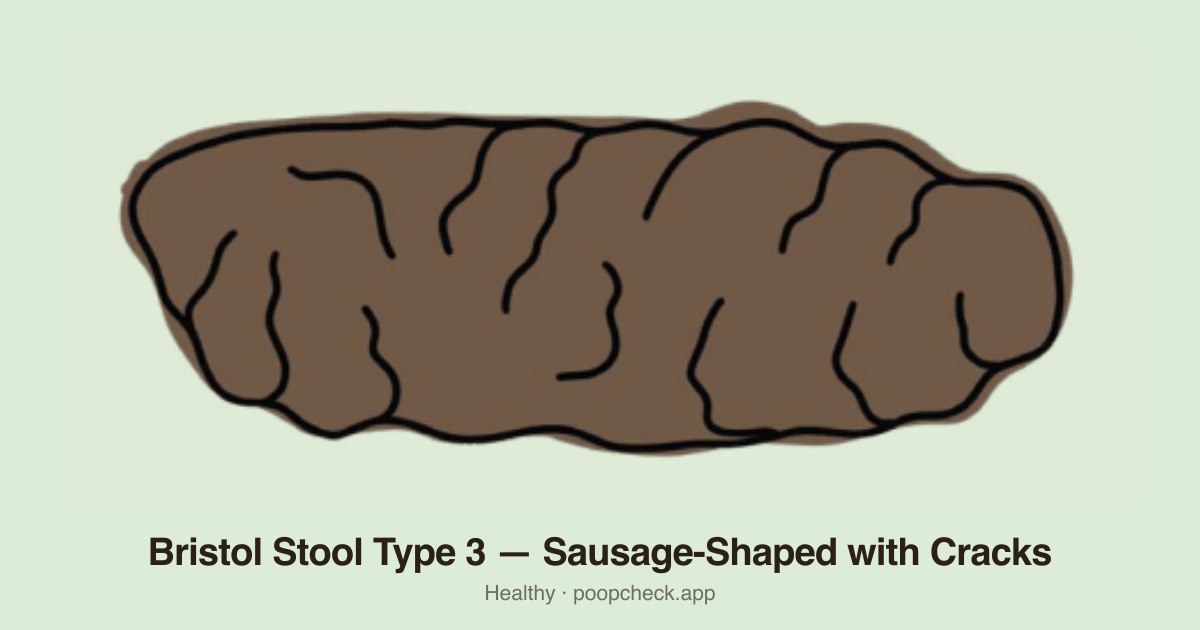
Type 3: Sausage-Shaped with Cracks
Like a sausage but with cracks on the surface. Holds together, passes smoothly.
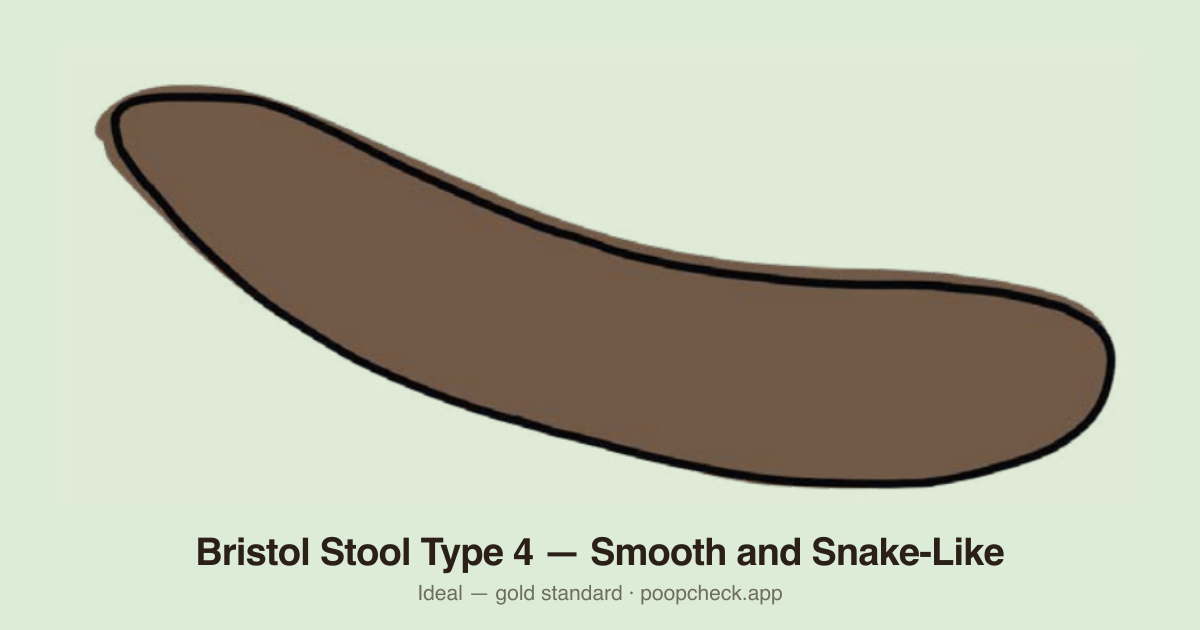
Type 4: Smooth and Snake-Like
Smooth, soft, and snake-like or sausage-shaped. Typically a single piece.
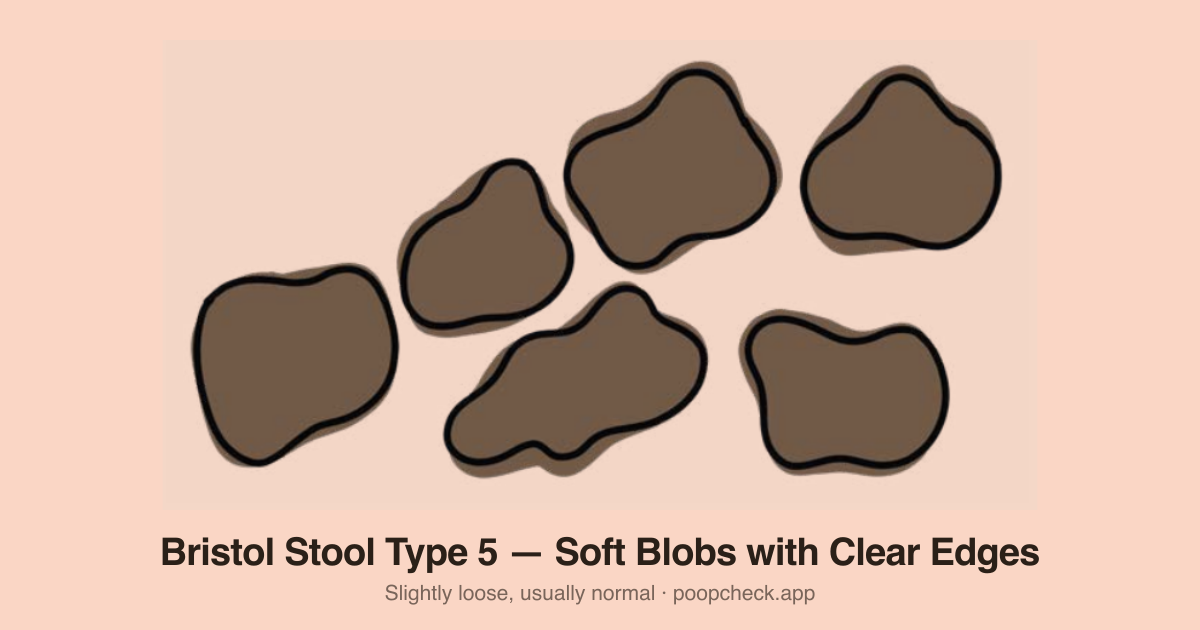
Type 5: Soft Blobs with Clear Edges
Soft blobs with clear-cut edges that pass easily. Multiple separate pieces.
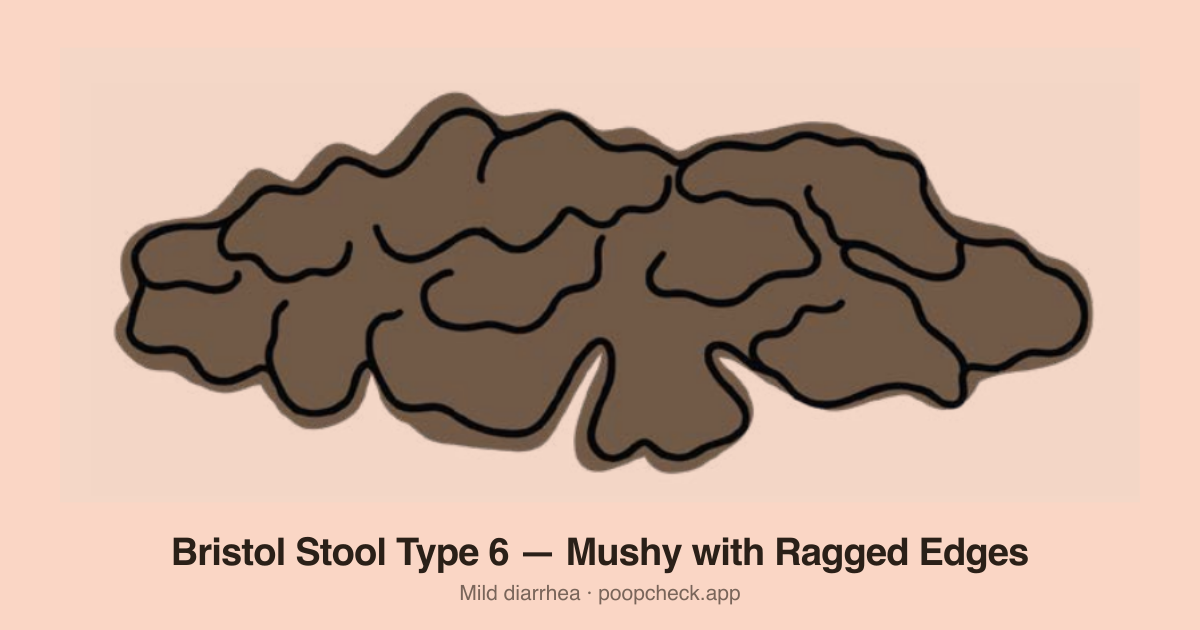
Type 6: Mushy with Ragged Edges
Fluffy pieces with ragged edges, a mushy stool. No definite shape.
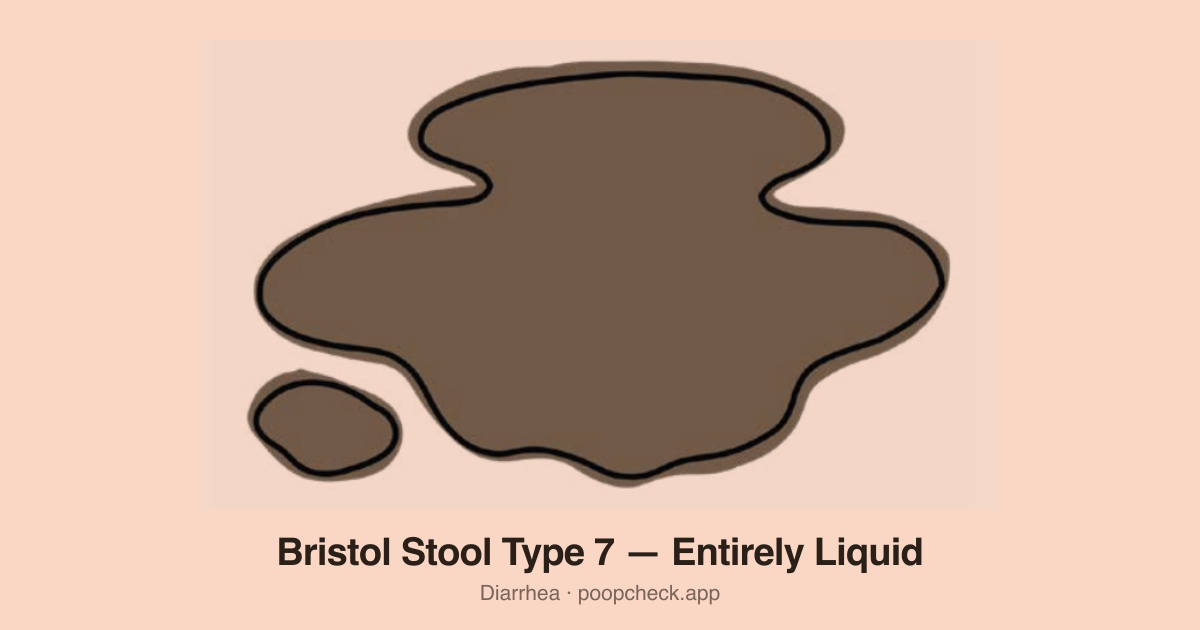
Type 7: Entirely Liquid
Completely liquid with no solid pieces. Watery.
How to use the scale
Check your stool after each bowel movement and note the type. Over a few weeks, you'll see your personal baseline — most healthy people fall consistently in Types 3–4. Occasional drift into other types is normal; it's the pattern that matters.
Use the scale to have more precise conversations with your doctor. "I've been having mostly Type 2 for three weeks" is a specific, actionable report; "I think I've been a bit constipated" is not.
Why PoopCheck uses the Bristol Scale
PoopCheck's AI classifies your stool on the Bristol Scale automatically from a photo — no manual selection, no guesswork. Combined with color and consistency analysis, the app builds a daily gut-health score and surfaces the patterns humans miss. Most people can't reliably remember last Tuesday's Bristol type; the app remembers for you.
Healthy vs concerning patterns
- Healthy baseline: Types 3–4 most days.
- Acceptable variation: occasional Type 2 or 5.
- Investigate: persistent Type 1–2 (constipation) or Type 6–7 (diarrhea) for more than 2 weeks.
- See a doctor promptly: any Bristol type combined with blood, mucus, unexplained weight loss, severe pain, or fever.
PoopCheck is a tracker, not a diagnostic tool. This page summarizes widely-accepted medical information but isn't medical advice. See a clinician for any concerning symptoms.
Track your Bristol type automatically
Take a photo — PoopCheck classifies Bristol type, color, and consistency in seconds.
Download Free